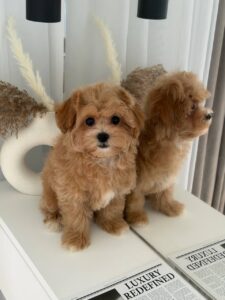
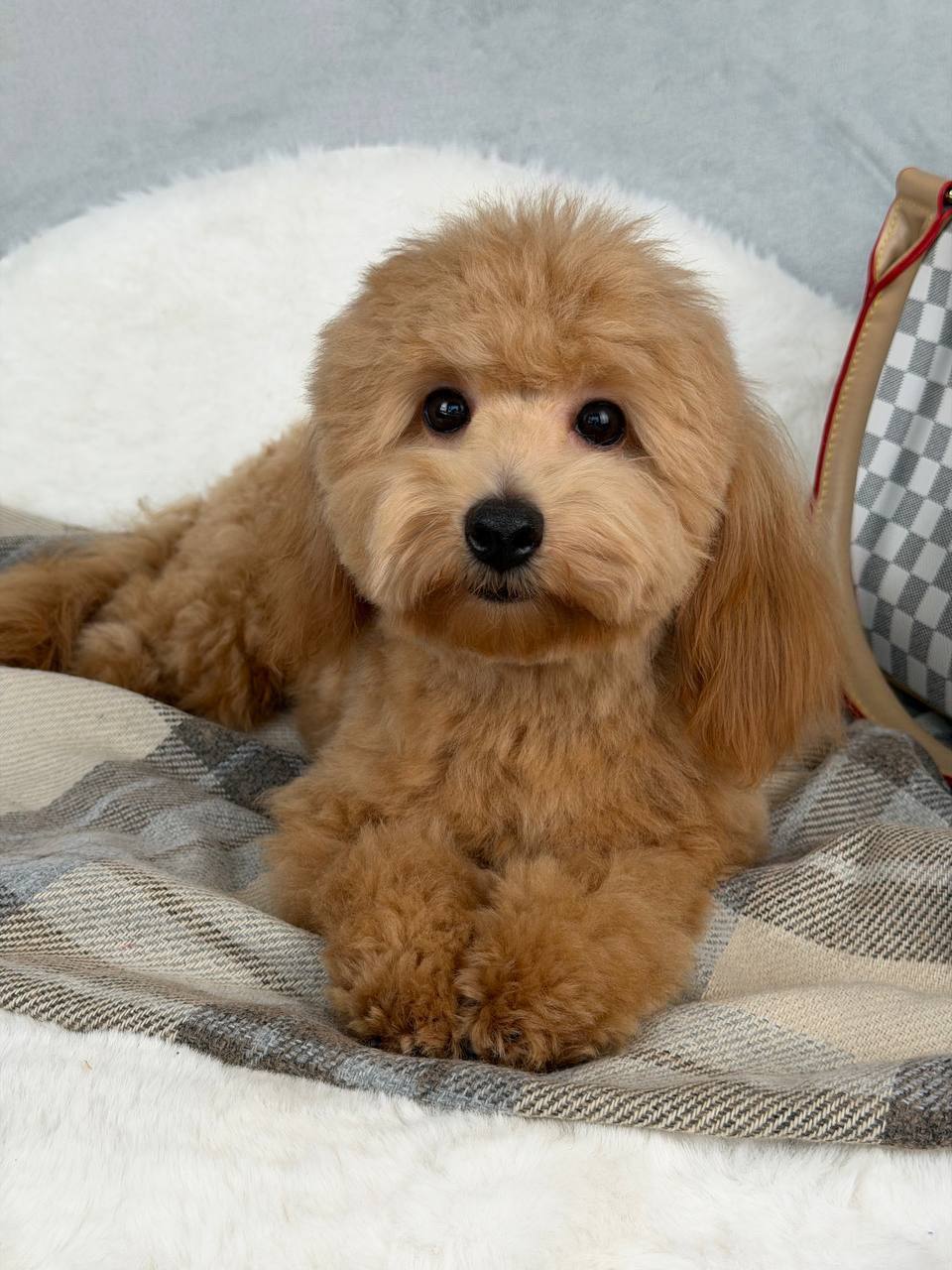
The Maltipoo is a cross between a Maltese and a Poodle, so choosing between the three comes down to how much predictability you want. The purebreds are more consistent in size, coat, and temperament, while the Maltipoo blends traits from both and varies more from dog to dog. This guide compares all three so you can decide which suits your home, budget, and lifestyle.
Quick Comparison
| Maltipoo | Maltese | Toy or Mini Poodle | |
|---|---|---|---|
| Weight | 5 to 20 lb | 4 to 7 lb | Toy: 4 to 6 lb, Mini: 10 to 15 lb |
| Height | 8 to 14 in | 7 to 9 in | Toy: under 10 in, Mini: 10 to 15 in |
| Coat | Wavy or curly, low-shedding | Straight, silky, single-layer | Dense, curly, low-shedding |
| Colors | White, cream, apricot, chocolate, black, parti | White (sometimes with light ivory) | Many solid colors |
| Temperament | Affectionate, playful, adaptable | Gentle, lively, devoted | Intelligent, eager, energetic |
| Trainability | Good | Moderate | Excellent |
| Grooming | Regular brushing, groomer every 6 to 8 weeks | Daily brushing, frequent grooming | Regular brushing, groomer every 4 to 6 weeks |
| Lifespan | 10 to 15 years | 12 to 15 years | 12 to 15+ years |
| Typical price | $1,500 to $3,500 | $1,000 to $3,000 | $1,500 to $3,500 |
These are typical ranges, and individual dogs vary.
Size and Appearance
Maltese are consistently tiny, with a long, straight white coat that drapes to the ground if left uncut. Poodles come in three sizes, with Toy and Miniature the ones people usually compare to Maltipoos. Their coat is dense and curly, and they come in many colors.
Maltipoos land in between and are the least predictable. Depending on the Poodle parent and which coat gene wins out, one puppy may look like a fluffy Maltese, while its sibling has a curly Poodle-style coat. If a specific look or adult size matters to you, a purebred is the safer choice.
Temperament and Personality
Maltese are gentle, affectionate lap dogs with a playful streak. They bond closely, which can lead to separation anxiety, and some are stubborn about training or bark at noises.
Poodles are among the most intelligent dog breeds. They learn fast, love having a job, and need real mental stimulation. Left bored, they can become anxious or mischievous.
Maltipoos tend to combine the Maltese’s warmth with the Poodle’s trainability, and many are easygoing, social, and eager to please. But personality isn’t fixed by breed mix, so a Maltipoo can lean more toward either parent.
Shedding and Allergies
All three shed very little, since their coats grow continuously. That doesn’t make any of them hypoallergenic, because allergies come from dander and saliva, not hair. Many allergy-prone owners tolerate all three, but reactions are individual, so spend time with the dog first.
Maltese have a single-layer coat that’s fine and easy to tangle. Poodles and Maltipoos with curlier coats mat easily if brushing is skipped.
Grooming Needs
None of these are low-maintenance in the grooming department:
- Maltese: daily brushing, a professional trim every 4 to 6 weeks if kept long, and daily face cleaning to manage tear staining.
- Poodle: brushing several times a week, plus a professional groom every 4 to 6 weeks to keep the coat manageable.
- Maltipoo: brushing 3 to 4 times a week and grooming every 6 to 8 weeks, with more frequent brushing if the coat is curly.
Health Considerations
Each has its own tendencies:
- Maltese: dental disease, patellar luxation (slipping kneecaps), tear staining, and some liver-related conditions.
- Poodles: eye conditions such as progressive retinal atrophy, skin disorders, and Addison’s disease.
- Maltipoos: can inherit issues from either parent, most commonly dental problems, luxating patella, and eye or ear issues.
You may hear that mixed breeds are automatically healthier (“hybrid vigor”). The reality is less clear. A cross can lower the risk of conditions specific to one breed, but it can also inherit the problems of both. What matters most is health testing on both parents, whichever breed you choose.
Cost
Purchase prices overlap, and all three usually fall in the low-to-mid thousands from reputable breeders. Ongoing costs are similar too, with professional grooming as a major yearly expense for all of them.
Which One Should You Choose?
Choose a Maltese if you want a very small, calm lap dog with a predictable size, and you don’t mind daily grooming.
Choose a Poodle if you want the smartest, most trainable option, you like a more active dog, and you’d like a wider choice of sizes and colors.
Choose a Maltipoo if you want a friendly, adaptable companion that blends the two and you’re comfortable with some variation in size, coat, and personality.
Frequently Asked Questions
Is a Maltipoo better than a Maltese?
Neither is better overall. Maltipoos are usually easier to train and slightly sturdier, while Maltese are more predictable in size and appearance.
Which is smarter, a Maltipoo or a Maltese?
Maltipoos are typically more trainable because of the Poodle side, though individual dogs vary.
Do Maltipoos bark more than Maltese?
Not reliably. Both can be vocal if bored or left alone, and barking depends more on training and routine than on breed.
Are Maltipoos healthier than purebreds?
Not automatically. Health depends on the parents’ testing and the breeder’s practices, not just the mix.
Which is best for apartments?
All three adapt well to apartment living, as long as they get daily walks and company.
Which is best for first-time owners?
Maltipoos and Poodles are often easier because of their trainability, but a well-socialized Maltese can be a great match too.
Bottom Line
The right choice depends on what you value most: predictability (Maltese or Poodle), trainability and activity (Poodle), or a blend of warmth and adaptability (Maltipoo). Whichever you choose, buy from a breeder who health-tests both parents and lets you meet them.